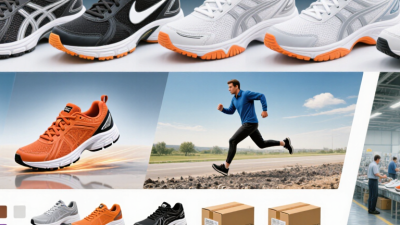
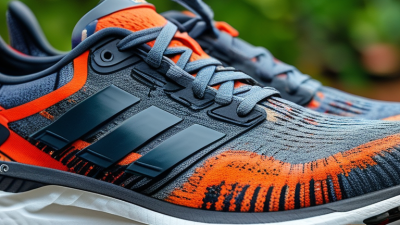
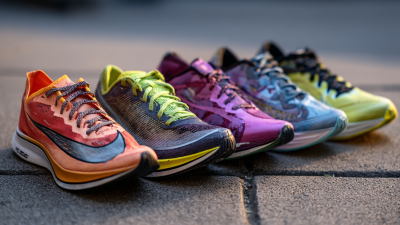
2026 Best Men Sports Shoes Wholesale Suppliers
Choosing the right Men Sports Shoes wholesale supplier takes more than comparing prices. In 2026, buyers must weigh product quality, dependable communication, and the supplier’s ability to meet changing demand. A low unit price can lose its appeal when size runs arrive incomplete or delivery dates keep moving. Small details matter. Check outsole grip, stitching around the toe, insole comfort, and how consistently the same model fits across sizes. Request samples before placing a large order. A polished catalog is not proof. It is only a starting point.
This guide introduces wholesale suppliers and explains what buyers can check before making contact. It considers product range, minimum order quantities, sample policies, production capacity, shipping timelines, and after-sales support. Ask for clear product specifications and recent photos, then compare them with the physical sample. For example, inspect whether the sole bends evenly and whether seams remain neat after ordinary handling. Supplier claims should be verified, not simply repeated. Requirements can differ by market and product type, so confirm relevant documentation for your business before ordering. No single supplier fits every retailer. Some offer broad catalogs, while others focus on a narrower range or more flexible order sizes. The comparison can help narrow the options, but it cannot replace direct checks. A careful decision may take longer. That is usually better than discovering avoidable problems after stock has arrived.
Market Baseline: 22.4B Pairs Produced in 2023 (World Footwear Yearbook)
The World Footwear Yearbook puts global footwear production at 22.4 billion pairs in 2023. That figure gives wholesale buyers a useful sense of manufacturing scale. It covers footwear as a whole, not just men’s sports shoes, so it should not be read as a category-specific demand forecast. A large number, but not a buying plan.
For 2026 sourcing, the baseline makes supplier capacity and product consistency worth checking closely. Ask for current production lead times, minimum order quantities, and samples in the sizes you plan to stock. Inspect stitching, sole bonding, and cushioning after repeated flexing; small flaws can become costly across a large order. Request clear specifications for materials and sizing, then compare them with pre-shipment samples. Production volume alone does not guarantee dependable quality. Nor does it prove that a supplier can meet your delivery window. The yearbook figure is useful context, but it is broad and backward-looking. Pair it with recent sales data and a realistic test order before committing to seasonal inventory.
2026 Best Men’s Sports Shoes Wholesale Suppliers — Market Baseline
Global footwear production reached 22.4 billion pairs in 2023. The chart shows the leading producing countries’ shares of total footwear production.
China, India, Vietnam, Indonesia, and Brazil are shown by production share. These figures cover all footwear, not sports shoes specifically. Source: World Footwear Yearbook 2024; global production baseline: 22.4 billion pairs in 2023.
Supplier Geography: Asia Made 87.4% of Footwear in 2023 (World Footwear Yearbook)
Asia produced 87.4% of the world’s footwear in 2023, according to the World Footwear Yearbook. That figure makes the region a major place to investigate when sourcing men’s sports shoes wholesale. It covers footwear production broadly, though, not sports shoes alone. A large manufacturing share does not automatically mean every supplier fits a buyer’s needs.
Production capacity varies between countries, factories, and product types. Ask potential suppliers whether they regularly make the specific shoe construction you need, such as mesh running shoes or rubber-soled training shoes. Request recent samples and inspect stitching, sole bonding, sizing consistency, and material specifications. Small details matter. A sample may look sound under bright showroom lights but feel different after repeated wear.
Before placing a bulk order, clarify monthly capacity, lead times, minimum quantities, and inspection procedures in writing. Ask how material changes are communicated and whether production records can be shared. These checks take time, and paperwork may not reveal every weakness. Still, comparing several qualified factories can help buyers avoid choosing on price or geography alone. Asia’s production share is a useful starting point, not a substitute for direct supplier evaluation.
Supplier Types and Sourcing Models for Men’s Sports Shoes
Men’s sports shoe sourcing starts with matching the supplier type to your sales plan. Factory-direct suppliers can offer more control over materials, fit, and production details, but often require larger orders. Trading companies may combine several product categories and help coordinate communication. Stock wholesalers are useful when you need ready-to-ship sizes, though color and size availability can change quickly. Check the actual size run.
Sourcing models differ, too. Ready-stock purchasing suits retailers testing demand with smaller quantities. Custom production allows changes to the upper, outsole, or packaging, but usually involves sample approval and longer lead times. Ask for a physical sample and inspect stitching, sole flexibility, and comfort after a short wear test. A neat sample is not proof that every pair will match.
Before ordering, request a written size chart, minimum order quantity, production schedule, and quality-check process. Confirm how defects are handled and whether repeat orders can use the same materials. Keep key details in writing. One practical step is to compare a supplier’s sample with a finished production pair. Small differences can still matter on a shop floor, and I would not assume every supplier measures fit the same way.
Quality and Compliance: ISO 20344 Footwear Test Methods
2026 Best Men Sports Shoes Wholesale Suppliers
When comparing men’s sports shoe suppliers, ask how they verify product quality, not only how they describe it. ISO 20344 sets out test methods used to assess footwear and its components. It is not, by itself, a product certification or a guarantee of performance. Depending on the shoe and applicable requirements, testing may examine dimensions, sole properties, flexing, abrasion, or the bond between the upper and outsole. These details matter when shoes face repeated training sessions, damp floors, and daily handling.
Request reports for the exact model and materials you plan to order. Check the test date, sample identification, and laboratory details, then compare these with the production specification. A report for a similar-looking shoe may not reflect a change in outsole compound or upper construction. Ask suppliers how they control consistency between tested samples and bulk production. Even careful checks have limits; a laboratory result cannot fully predict comfort for every foot or surface.
Tips: Ask for relevant ISO 20344 test records, confirm model details, and inspect a production sample. Look closely at stitching, sole bonding, and left-right consistency. Small differences can be easy to miss.
Compare 2026 Suppliers by MOQ, Lead Time, Capacity, and Landed Cost
2026 Best Men Sports Shoes Wholesale Suppliers
Compare 2026 Suppliers by MOQ, Lead Time, Capacity, and Landed Cost
APICCAPS’ World Footwear Yearbook 2024 reports that global footwear production fell 6% to 22.4 billion pairs in 2023. That scale makes supplier screening more important, not less. National output does not prove one factory can meet your specifications. Compare written offers against one shared shoe specification: upper material, outsole compound, size run, packaging, and inspection standard.
Record MOQ by color and size, not just total order; a low headline minimum may hide costly size-broken cartons. Ask for confirmed sample, production, and booking dates, then check recent on-time shipment records. Request monthly capacity and current line loading. Capacity without open production slots is theoretical. An audit or live production video can verify equipment and output, though neither replaces independent inspection.
Compare landed cost per sellable pair, not factory price. Include tooling, packaging, inland transport, freight, insurance, duties, broker fees, inspection, and expected defects. Ask suppliers to state currency, quote validity, Incoterm, and carton dimensions; each can shift freight calculations. A neat spreadsheet still misses awkward realities, especially rework and late size corrections. Leave room for surprises.