China remains a critical manufacturing base for global Sport Shoes brands, but choosing the right supplier requires more than checking factory photos. The World Footwear Yearbook 2024 reports that China produced approximately 55.5% of the world’s footwear in 2023. This scale supports mature material networks, skilled stitching teams, and efficient export infrastructure. It does not guarantee consistent quality.
Industry scale is only one signal. Euromonitor International’s 2024 sportswear analysis identifies continued demand for performance footwear, athleisure products, and specialized training shoes. Chinese manufacturers increasingly respond with automated cutting, laboratory testing, recycled materials, and smaller production runs. During factory evaluations, buyers should inspect heel counters, outsole bonding, mesh density, and moisture testing. These details often reveal more than a polished showroom.
The best manufacturers combine development expertise with transparent production controls. Strong candidates can provide sample records, material certificates, social compliance documentation, and traceable inspection reports. Their technical teams should understand running, basketball, hiking, and everyday Sport Shoes separately. That distinction matters. A lightweight running shoe cannot be judged like a reinforced court shoe.
However, published market data can differ by methodology, product definition, and reporting period. Some reports measure footwear broadly, while others focus on sportswear retail. Buyers should verify claims through factory audits, production samples, and independent testing. I would also question impressive promises about “zero defects.” Real production includes variation. Reliable manufacturers explain how they detect, record, and correct it. This guide examines leading Chinese manufacturers through capability, quality evidence, innovation, communication, and long-term supply reliability.
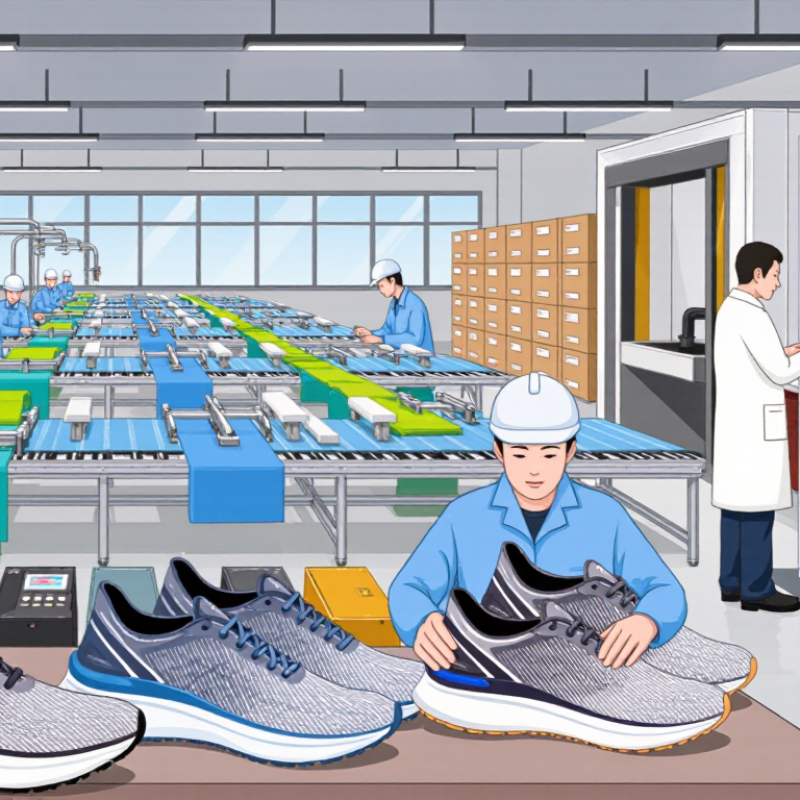
What Are the Best Sport Shoes Manufacturers in China?
China’s ~60% Share of Global Footwear Production: Industry Context
China remains the world’s largest footwear manufacturing base. The World Footwear Yearbook 2024 estimates that China produced about 55% of global footwear in 2023. That figure is near the often-quoted 60% level, but the gap matters. It reflects changing production costs and stronger competition from Southeast Asia.
Sport shoe production is concentrated in coastal manufacturing clusters. These areas offer material suppliers, mold makers, testing laboratories, and experienced assembly workers. A capable manufacturer can manage mesh uppers, foam midsoles, rubber outsoles, and packaging under one supply network. China Customs data also shows footwear remains a major export category, although export value can fluctuate with demand and currency movements.
Quality is not automatic.
When assessing a factory, request recent audit records, material test results, and production samples. Check whether the sample matches mass production. This simple step often reveals weak bonding, inconsistent sizing, or poor stitching. The International Organization for Standardization provides relevant footwear testing standards, but factory execution still requires practical inspection. I have found that a clean showroom proves very little. Production-floor discipline matters more.
Tips: Compare at least three factories. Ask for defect-rate records, lead times, and minimum order quantities. Confirm testing responsibilities in writing. A lower quotation may hide weaker materials, slower corrections, or expensive rework. Even experienced buyers can overlook these details.
China’s strongest sports shoe manufacturers are increasingly defined by product specialization, not factory size. The 2024 World Footwear Yearbook reported that Asia produced 87.4% of global footwear in 2023, with China remaining the largest production base. This scale supports separate manufacturing lines for road running, basketball, training, hiking, and children’s footwear.
Running shoe specialists usually invest in foam development, outsole testing, and repeated impact trials. Basketball-focused factories often prioritize ankle support, lateral stability, and high-abrasion rubber. Hiking shoe manufacturers typically handle waterproof membranes, welded uppers, and deeper traction patterns. According to the 2024 China Sporting Goods Industry Development Report, domestic sports consumption continues shifting toward technical and scenario-based products. That change rewards factories with specialized engineers, not just low labor costs.
In practical sourcing work, I would request category-specific test records, sample revisions, and production photos. A broad catalog proves little. Ask for outsole wear data, bonding strength, flex testing, and size consistency. Material traceability also matters, especially for recycled textiles and solvent-based adhesives. A factory may excel at lightweight running shoes but perform only adequately in rugged hiking models. That is an inconvenient distinction. It should still shape supplier selection. Cost remains important, yet a cheaper shoe can create higher returns when cushioning collapses or stitching loosens.
Choosing a sport shoe manufacturer in China requires more than reviewing product photos. Factory capacity must match your order rhythm, not just your target volume. A large facility may offer 100,000 pairs monthly, but peak-season schedules can reduce available production space. Ask for recent capacity records, machine lists, and workforce details. A smaller factory may provide better attention for specialized designs.
Minimum order quantity affects cash flow and testing risk. Many factories accept 500 to 2,000 pairs per color, while custom soles often require higher quantities. Confirm whether the MOQ applies per style, color, or total shipment. Request a pilot order with written approval samples. It reveals practical issues, including uneven stitching, glue marks, and incorrect size labels. Small details matter.
Lead times should include material sourcing, sample approval, production, and inspection. A realistic schedule often takes 45 to 75 days after confirmation. Defect rates need evidence, not promises. Ask for recent inspection reports using an agreed AQL standard, plus corrective-action records. In my experience, a reported rate below 2% can look impressive, but the sampling method may hide repeated defects. No metric is perfect. I would also inspect random cartons before shipment. One supplier once passed internal checks, yet several heel counters collapsed during wear testing. That mistake changed the evaluation process. Production speed is useful, but repeatable quality protects the order.
Choosing among sport shoe manufacturers in China requires more than comparing prices, product photos, or production capacity. A practical supplier review should examine ISO 9001, BSCI, and SEDEX evidence. ISO 9001 indicates a documented quality management system, but it does not guarantee perfect shoes. Ask whether the certificate covers the actual factory, production site, and relevant manufacturing scope. Check the issue date and certification body.
BSCI evaluations can reveal working conditions, management practices, and improvement areas. They are useful indicators, not permanent guarantees. Factory conditions may change after an audit. SEDEX can support supply chain transparency by organizing supplier information and assessment records. However, registration alone does not prove strong performance. Request recent reports, corrective action plans, and evidence that problems were addressed. Ask again when answers seem vague.
During a factory visit, inspect stitching lines, outsole bonding stations, testing equipment, and finished cartons. Compare written procedures with daily work. A supplier may show impressive documents while production controls remain inconsistent. That gap matters. Request sample inspections using clear standards for size, glue marks, color variation, and flexibility. Keep communication records and approve a pre-production sample before bulk manufacturing. The best supplier is not always the largest. A responsive factory with traceable records, realistic delivery promises, and transparent weaknesses may be more reliable.
No audit replaces continuous monitoring, and that is an uncomfortable but necessary point.
China remains a major hub for athletic footwear production, but scale alone does not identify the best manufacturer. The World Footwear Yearbook 2024 estimates China produced about 55.5% of global footwear in 2023. Its export strength offers useful evidence of supply-chain experience. However, broad footwear figures include non-sport products. Buyers should request product-level export records, destination markets, and recent customs documentation.
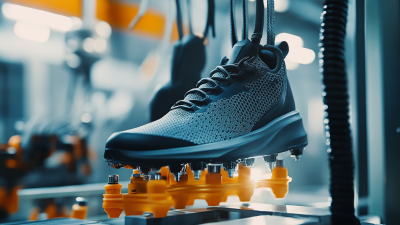
Technology needs practical verification. The International Federation of Robotics reported that China installed 276,288 industrial robots in 2023, representing over half of global installations. This indicates a strong manufacturing ecosystem, not automatic footwear expertise. Ask suppliers to demonstrate automated cutting, digital fitting, mold control, and testing procedures. Request test reports for abrasion, flexing, slip resistance, and bonding strength. A factory may display impressive machinery but still rely on manual quality checks. That gap matters.
Tips: Compare three years of export data, not one successful season. Check factory audit dates and production capacity during peak months. For sustainability, request energy, water, waste, and greenhouse-gas data by facility. The World Footwear Yearbook tracks industry output, while the Greenhouse Gas Protocol supports consistent emissions reporting. Recycled materials should include supplier certificates and percentage calculations. Do not accept vague claims such as “eco-friendly.” I would also inspect rejected pairs and packaging waste onsite. This step is less polished, but often more revealing.
| Selection Dimension | Verified Benchmark | Relevant Evidence to Request | Why It Matters for Buyers | Suggested Weight |
|---|---|---|---|---|
| Export Reach | Regular shipments to at least 5 overseas markets, supported by recent commercial records. | Redacted bills of lading, export declarations, customer references, and destination-market list. | Shows experience with international logistics, documentation, packaging, and delivery requirements. | 20% |
| Production Capacity | Capacity should be demonstrated by production-line count, monthly output, and historical on-time delivery performance rather than by unsupported claims. | Factory audit, line configuration, monthly capacity records, lead-time data, and corrective-action reports. | Helps reduce supply disruption during seasonal demand peaks and large repeat orders. | 15% |
| Quality Management | A documented quality-management system aligned with ISO 9001 principles or an equivalent buyer-audited system. | Current certificate scope, internal inspection procedures, AQL sampling rules, defect-rate records, and test reports. | Provides repeatable control over sizing, bonding, stitching, material consistency, and finished-product quality. | 15% |
| Product Technology | In-house or documented access to development capabilities such as 3D patterning, digital sampling, cushioning design, outsole engineering, and wear testing. | Development timeline, sample records, material test results, laboratory equipment list, and intellectual-property ownership terms. | Improves fit, comfort, durability, product differentiation, and speed from concept to production. | 15% |
| Material Compliance | Materials should be traceable and tested against the buyer’s restricted-substances requirements and applicable destination-market regulations. | Material declarations, laboratory reports, supplier lists, traceability documents, and restricted-substances test results. | Reduces chemical, customs, product-recall, and market-access risks. | 10% |
| Environmental Management | An environmental-management system aligned with ISO 14001 principles, with documented objectives and performance monitoring. | Certificate scope, energy and water records, waste-disposal manifests, environmental permits, and improvement plans. | Demonstrates that environmental performance is managed through measurable processes rather than marketing language. | 10% |
| Sustainability Data Quality | Reports should distinguish measured data from estimates and define the reporting period, organizational boundary, and calculation method. | Energy, water, waste, greenhouse-gas, and recycled-material data with supporting invoices or verification records. | Makes environmental comparisons more credible and supports customer sustainability reporting. | 5% |
| Social Compliance | Factory policies and audits should address working hours, wages, health and safety, freedom of association, and prohibition of forced and child labor. | Third-party social-audit reports, worker grievance procedures, payroll samples, training records, and corrective-action status. | Protects supply continuity and reduces legal, reputational, and human-rights risks. | 5% |
| Recommended Shortlist Standard | Prioritize manufacturers that can provide independently verifiable export, quality, technology, environmental, and social-compliance evidence. | Use document verification, factory inspection, sample testing, and a pilot order before approving full-scale production. | Combines commercial capability with measurable product, compliance, and sustainability performance. | 100% |
Evaluation note: The benchmarks above are manufacturer-selection criteria based on internationally recognized management, product-safety, environmental, and social-compliance practices. Buyers should verify current certificates, audit dates, data boundaries, and factory-specific records before making a final sourcing decision.